
Talk the talk: Marketing Vocab 101
About the Author: Shoshi Weinstein

Find me on:

Introduction – marketing vocab
Whether you’re an entry level marketing coordinator or a CMO, marketing lingo can feel like it’s a sea of confusing acronyms. In this blog post, we’re gonna go through the rundown of all of the marketing vocabulary you need to know to hit the ground running. In the past, the marketing dictionary was fairly simple, but with the rise of digital and inbound marketing, social media and SEO, suddenly there’s plenty of new terminology you got to know. So before you you go out there walking the marketing walk, make sure you read this so you’re talking to the marketing talk.
The big picture
So let’s get started, shall we? Let’s start with the big picture. Digital marketing? Content marketing? Social media marketing? Inbound marketing? Are these all the same? Kinda, but no.
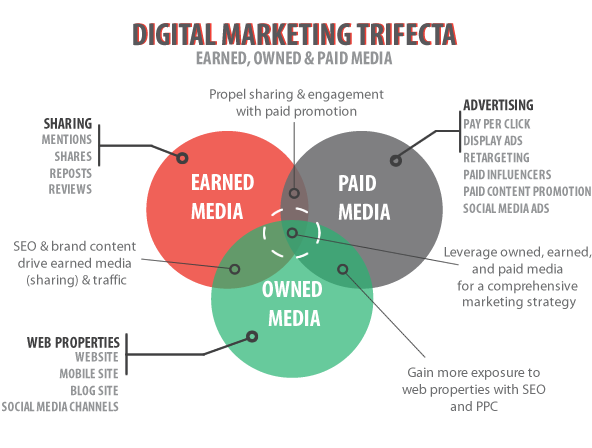
If we zoom out, we can talk about the umbrella of digital marketing, or the marketing of products or services through technological mediums like the internet, mobile, etc. Under this umbrella, we have three categories:
- Owned media
- Paid media
- Earned media
Sorry if it seems like I’m adding insult to injury of your marketing lexicon, but stick with me. Owned media includes the basis of your digital marketing efforts. It’s your website, mobile site (or app), blog and social media channels. It’s the content you put out for the world to see.
Paid media, is your advertising efforts. As suggested by the name, this channel shows that when done right, money talks. Using Pay Per Click (PPC), influencer marketing (we’ll get there), and paid content ads, this is the strategy used to get your name and product in front of your prospects.
Earned media is the high five you get at a crowded party that gets people’s attention. It’s the shares on social media, the name-drops on Twitter, and reviews in an online magazine. The result? With some genuine hype (and/ or some good PR), earned media turns heads and gets people talking.
(Courtesy of Quora)
Content marketing vs. Social media marketing
Aren’t these the same? Not quite. Many people might call these two the flirty soul sisters of marketing. Unlike the analytical backend side of marketing, these two are the personable faces of any company. Marketing thought leader Jay Baer once distinguished between the two as follows:
The goals of content are consumption, then behavior. The goals of social are participation, then behavior.
Content Marketing reminds me of a summer camp bonfire. You have the ability through blogs and other forms of content to tell stories about your company, product, or content. Social Media Marketing is a way to engage your audience to participate in the conversation.
Third party marketers: Affiliate Marketing vs. Influencer Marketing
It’s human nature that people trust people more than people trust brands. Enter: affiliate and influencer marketers. They can create blogs, vlogs, Tweets, and all other kinds of content that people consume, trust, and follow. By reviewing or mentioning a brand or product, they can easy create brand awareness to their niche audiences. How do they get paid? Each can use special tracked links and cookies to directly tie sales to those that were generated from viewing their content about the brand or product.
So what makes them different?
Affiliate marketing
- These companies promote products, sales, and offers of other companies through blogs, reviews, paid ads and participating in online discussions.
- Affiliates are paid a commission from the sales resulting from the traffic they generate to the sites that sell the product/service promoted.
- Unlike influencers, affiliates will work hand in hand to ensure that the content being posted is in line with the kind of review the brand has in mind. By having the ability to censor the content being published, companies can ensure that their brand is being well represented.
Influencer marketing
- Usually individuals (bloggers, authors, consultants, etc.) who have a strong niche following either online or on social media.
- Influencers are (usually) paid a flat fee to promote a brand. This can come with free perks or products to use and review.
- One unique strength of their influence is that since their reviews tend to be posted through social media, social engagement like commenting, liking, sharing can be generated quickly, bringing new followers to the brand’s social media platforms.
- Influencer marketers can be a bit tricker because brands have less of a say in how their product is presented. This is a great double edged sword because while companies can have their hands tied about their product’s presentation, consumers tend to trust influencers to be true to themselves and the needs of their audience. Take a thought leader for example. If a company in his vertical sends him a “goodie bag” with their software to try, there’s a good chance he’s going to put out some kind of review for it. While it’s hard to say bad things about free stuff, the ball’s in his court.
Let’s talk SEM keywords (and acronyms)
Oh SEM (Search Engine Marketing). You’re so dynamic, you get your own subheading. Looking at the Digital Marketing Trifecta above, SEO (Search Engine Optimization) is placed between Owned Media and Earned Media. But what’s the difference between SEM and SEO?
Most simply put, SEM is the larger umbrella that holds SEO, but also includes PPC (Pay Per Click). PPC earned its name because it allows advertisers to pay only when someone clicks on their ads that leads the prospect to a company’s website. Within PPC, PSA (Paid Search Advertising) is the ability to put your brand at top of search engine results pages (SERPs) by paying a price.
That being said, SEO is the tools (e.g. Google Search Console, Majestic, Moz OSE, or SEMrush) and tricks (e.g. keywords) that allow you to have your brand organically appear at the top of search results through continued analytics and testing. Online Reputation Management (ORM) is the act of staying on top of your online perception on SERPs to ensure that people see what you want them to see.
Conclusion
That’s all folks! I hope this was helpful for anyone looking for a clearer understanding about some of the existing terminology in the field of digital marketing. One last term for you. Inbound marketing is the perspective of all of these forms of marketing through the customer-centric lens of educating and delighting consumers. Through inbound, marketers work to meet customers where they’re at in the buyer’s journey, whether they’re Googling a how-to, trusting vlog content from influencers, or comparing pricing and features before they decide to buy.
Now that you can talk the talk, let’s see you walk the walk. Check out our eBook 30 Greatest Lead Generation Tips, Tricks, & Ideas to get starting on taking your next digital marketing steps.
Shoshi Weinstein
Shoshi hails from NYC, and is addicted to the startup life. She holds a degree in psychology and communications (IDC Herzliya) and is a published researcher. Your basic millennial, Shoshi loves gluten-free baking and sees her life through the lens of her instastories.
SHARE THIS STORY
Shoshi hails from NYC, and is addicted to the startup life. She holds a degree in psychology and communications (IDC Herzliya) and is a published researcher. Your basic millennial, Shoshi loves gluten-free baking and sees her life through the lens of her instastories.


