
Essential Google Analytics Uses for Informed CEOs
About the Author: Boaz Goldstein

Find me on:

Google Analytics remains the most used set of analytical tools for monitoring and tracking online statistics. Businesses across all industries use these tools to evaluate and improve the effectiveness of their marketing campaigns.
If you currently only use Google Analytics to keep track of the number of visitors to your website, you are missing out on key features used by informed CEOs and marketing experts.
The goal of this post is to help you discover the essential functions that you should be using and how they can help improve your marketing campaigns.
Why Do You Need to Use Google Analytics?
For those who are unfamiliar with this platform, Google Analytics is a set of free analytical tools and resources available to any business or entrepreneur. As your website is the hub of all your online traffic, analyzing your website offers useful information for any marketing campaign.
By using Google Analytics, you can gain a better picture of how people use your website and who these visitors are. You can identify and monitor your audience, determine where they came from, and even set your own goals.
Identify and Monitor Your Audience
The most essential use of Google Analytics is for identifying and monitoring your audience. Identifying your audience is part of the acquisition data. Google collects details about user demographics before those users visit your website.

Some businesses may have no idea who their customers are. With this acquisition data, you can gather the following details about your audience:
- Age
- Gender
- Interest
- Location
- Type of web browser
used Using these details, you may determine that your website tends to attract an audience in a specific demographic, such as young adults or senior citizens. This can help you tailor your marketing campaign to focus more on this demographic to increase conversion rates.
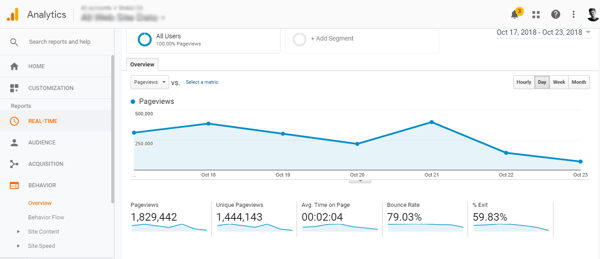
You can also monitor your audience after they arrive on your website. User behavior data includes a variety of useful information about the way users interact with your web pages, such as the following:
- How long they stayed on a web page
- Whether they visited any other pages
- Whether they followed any links
- How many times they have visited the website
These details are useful for improving the user experience of your website. You may find that visitors tend to leave your website after visiting a specific page. You can then make a few simple changes to that page to help direct visitors to other content on your website.
Determine How Your Audience Found Your Site
You can also use Google Analytics to determine how people are finding your website. Google has a set of default traffic channels, letting you know where visitors came from before visiting your site. These channels include the following:
- Direct – the visitor types the URL into their browser O
- organic search results
- Social media traffic
- Email traffic
- Affiliate marketing traffic
- Referral traffic – traffic from external links
- Paid search traffic
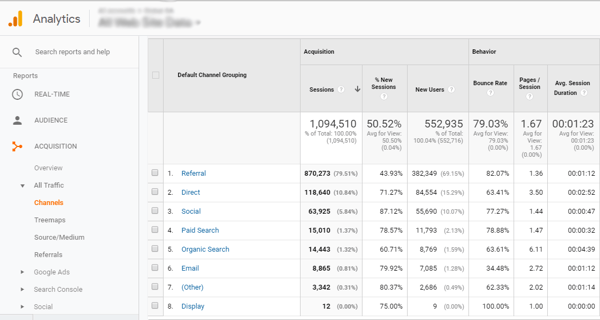
Viewing this information lets you know how people are arriving at your site, allowing you to assess whether or not your marketing efforts are working. By evaluating these channels, you can determine where you need to focus your marketing efforts. For example, after an extensive social media marketing campaign that includes a link to a specific landing page, you should see an increase in social media traffic. If there is no increase, you may need to evaluate the content used for the social media marketing campaign.
Set Unique Marketing Goals and Track Your Progress
Google Analytics also provides features which allow you to set goals. While you can set goals for any reason, these features are most commonly used to set milestones for marketing campaigns. You can choose to set a goal of increasing your conversion rates or lowering the bounce rates.
You can also use filters to gain insight into visitor behavior and your progress in reaching your goals. For example, you can filter your data to focus on incoming social media traffic from a specific platform, such as Facebook.
Last Thoughts on Google Analytics
Every CEO and marketing manager should be using Google Analytics to gain valuable insight into their target audience and the results of their marketing efforts. You can evaluate traffic flow, determine what users are searching for, and discover valuable information about your website visitors.
Remember to use these essential features of Google Analytics to maximize your next marketing campaign and build a stronger brand.

Boaz Goldstein
Boaz has broad experience in SEO and planning marketing strategies for small and medium-sized businesses, as well as being Google AdWords certified. When the work is done for the day, Boaz is playing guitar and managing his band Adamas. With a passion for continuous learning, he’s now learning coding and programming.
SHARE THIS STORY
Boaz has broad experience in SEO and planning marketing strategies for small and medium-sized businesses, as well as being Google AdWords certified. When the work is done for the day, Boaz is playing guitar and managing his band Adamas. With a passion for continuous learning, he’s now learning coding and programming.


